Women’s cashmere sweaters consistently rank among the most searched knitwear products worldwide. Keywords such as cashmere sweater women, women’s cashmere sweater, and women’s cashmere sweater manufacturer show stable, long-term demand across North America, Europe, and Asia.
Yet behind this apparent simplicity lies one of the most technically demanding knitwear categories from a manufacturing perspective.
For brands, retailers, and wholesalers sourcing women’s cashmere sweaters for OEM or wholesale programs, understanding how manufacturing specifications affect quality, fit, durability, and reorder potential is critical. This article provides a detailed, manufacturer-focused explanation of the key technical decisions that shape successful women’s cashmere sweater production.
Table of Contents
1. Why Women’s Cashmere Sweater Manufacturing Requires Exceptional Precision
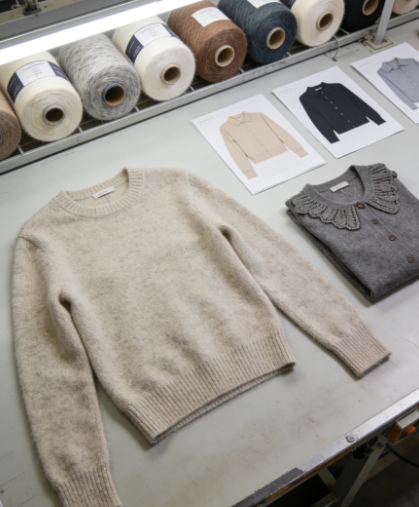
Women’s cashmere sweaters differ fundamentally from men’s styles in one important way: tolerance for imperfection is much lower.
While men’s sweaters prioritize durability and consistency, women’s sweaters must simultaneously achieve:
● Soft hand feel
● Accurate fit and silhouette
● Visual refinement
● Long-term shape retention
A sweater that feels soft but loses its shape after washing will quickly damage a brand’s reputation. Manufacturers therefore face a constant trade-off between softness and structural stability.
From a production standpoint, women’s cashmere sweaters are less forgiving of shortcuts in yarn selection, knitting, and finishing.
2. Market-Driven Differences in Women’s Cashmere Sweater Specifications
Although women’s cashmere sweaters are globally popular, manufacturing specifications vary significantly by target market.
European Markets
European buyers often request:
● Lightweight garments for layering
● Finer appearance and drape
● Lower finished garment weight
Manufacturers typically adjust yarn count and knitting gauge to achieve a refined look suitable for transitional seasons.
North American Markets
North American programs tend to emphasize:
● Slightly heavier weight
● Increased warmth and structure
● Improved durability
This often results in higher yarn consumption and more intensive finishing.
Asian Markets
Asian buyers usually prioritize:
● Exceptional surface smoothness
● Elegant silhouettes
● Minimal visual pilling
For these markets, manufacturers place greater emphasis on fiber selection and de-hairing processes.
Successful manufacturers rarely apply a single specification globally. Instead, they fine-tune production parameters based on the final sales destination.
3. Yarn Selection: What Truly Determines Cashmere Performance
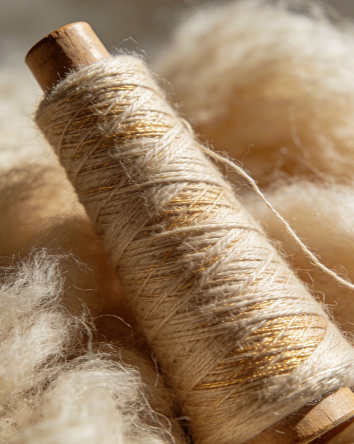
Many buyers request “100% cashmere,” but from a manufacturer’s perspective, fiber content alone is only the starting point.
Fiber Length and Fineness
Longer cashmere fibers:
● Improve yarn strength
● Reduce pilling
● Maintain softness over time
Extremely fine fibers may feel luxurious initially but can compromise durability if not balanced properly.
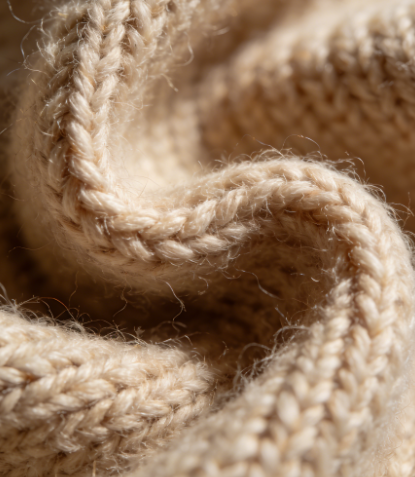
Ply Structure: Why 2-Ply Matters
For women’s cashmere sweaters, 2-ply yarn is widely recommended.
Advantages of 2-ply yarn include:
● Improved resistance to abrasion
● Better shape retention
● Reduced risk of deformation after washing
Single-ply yarn may lower initial cost, but it often results in higher after-sales complaints and reduced garment lifespan.
4. Yarn Count and Its Impact on Appearance and Cost
Yarn count selection affects both appearance and cost control. The NM (Number Metric) yarn count system, as defined by Wikipedia, measures how many meters of yarn weigh one gram, allowing manufacturers to accurately manage garment weight, density, and consistency in women’s cashmere sweater production.
Common yarn counts used in women’s cashmere sweater manufacturing include:
● 2/26 NM: lighter, finer appearance
● 2/24 NM: balanced option for most programs
Finer yarns produce a smoother surface but increase cost and require stricter quality control during knitting and finishing.
Manufacturers often guide buyers toward yarn counts that balance desired aesthetics with long-term performance.
5. Knitting Gauge: The Hidden Driver of Fabric Behavior
Knitting gauge directly influences fabric density, drape, and durability. According to Knitting Industry, higher gauge knitting produces finer, more compact fabrics, while lower gauge structures result in heavier, chunkier garments. Selecting the correct gauge is essential for balancing softness, fit accuracy, and long-term performance in women’s cashmere sweaters.
Common Gauges in Women’s Cashmere Sweaters
● 12GG: fine appearance, elegant drape, higher cost
● 9GG: balanced, most widely used for wholesale programs
● 7GG: chunky look, higher yarn consumption
For most women’s cashmere sweater programs, 9GG knitting offers the best compromise between softness, durability, and price stability.
6. Fabric Density and Stitch Balance
Beyond gauge, stitch density plays a crucial role in fabric behavior.
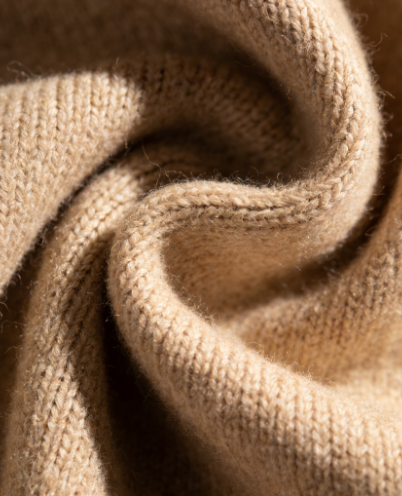
If stitches are too loose:
● The sweater may stretch and lose shape
● Surface pilling increases
If stitches are too tight:
● Fabric loses elasticity
● Garment feels stiff and uncomfortable
Experienced manufacturers adjust stitch balance based on yarn behavior and target weight.
7. Weight Standards and Tolerance Control in Bulk Production
Weight consistency is one of the most critical—and often underestimated—factors in women’s cashmere sweater production.
Typical Finished Weight Ranges
● 220–260g: lightweight, layering-focused styles
● 260–320g: structured, winter-oriented sweaters
Manufacturers carefully control weight tolerance during bulk production. Even small deviations can affect:
● Fit accuracy
● Drape and silhouette
● Customer perception of value
8. Finishing Processes That Define Perceived Quality
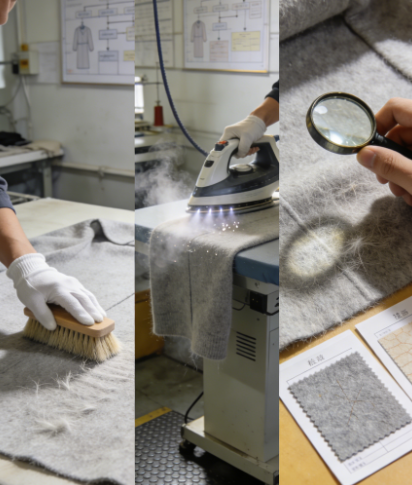
Finishing is where experienced manufacturers differentiate themselves.
Key finishing processes include:
● De-hairing: removes coarse fibers and improves surface smoothness
● Pre-washing: minimizes post-sale shrinkage
● Anti-pilling treatment: enhances wear performance
● Steam shaping: ensures consistent garment dimensions
Skipping or reducing finishing steps may lower cost but often leads to higher return rates.
9. Women’s Cashmere Cardigans vs Pullovers: Manufacturing Differences
Women’s collections frequently include both pullovers and cashmere cardigans, but cardigans require additional technical considerations.
Key Challenges in Cardigan Manufacturing
● Front opening stability
● Button placket reinforcement
● Balanced weight distribution
Manufacturers often recommend stronger yarn structure and reinforced seams to maintain long-term shape.
10. Color Selection and Its Manufacturing Implications
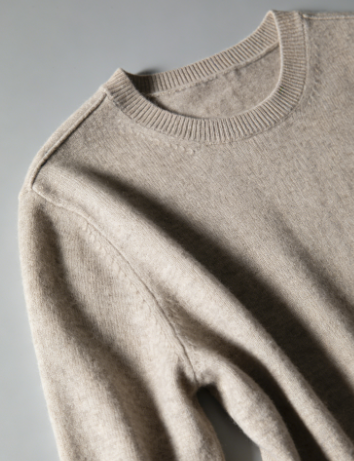
Neutral colors such as beige, ivory, and light grey are popular in women’s cashmere sweaters but demand stricter control.
Light shades require:
● Cleaner raw fiber
● More precise dyeing control
● Higher rejection standards
Manufacturers often advise starting with core colors before expanding into customized shades.
11. Common Buyer Mistakes in Women’s Cashmere Sweater Sourcing
From a manufacturer’s perspective, frequent sourcing mistakes include:
● Over-prioritizing softness at the expense of durability
● Ignoring weight tolerance during bulk production
● Selecting yarn based solely on sample feel
Long-term success depends on balanced specifications rather than initial impressions.
12. MOQ and OEM Considerations for Women’s Cashmere Sweaters
MOQ depends on:
● Yarn availability
● Color quantity
● Design complexity
Manufacturers with flexible yarn sourcing can support smaller MOQs, particularly for initial OEM programs or market testing.
13. Why Manufacturer Involvement Early in Development Matters
Early technical input helps buyers:
● Optimize yarn and gauge selection
● Avoid unnecessary sampling rounds
● Control development cost and timeline
This collaboration significantly improves bulk production outcomes.
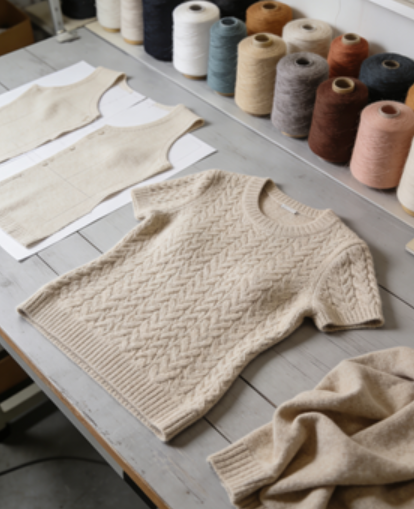
14. Choosing the Right Women’s Cashmere Sweater Manufacturer
When evaluating manufacturers, buyers should consider:
● Raw material control
● Yarn development capability
● In-house knitting and finishing
● Quality control systems
● Export and OEM experience
A reliable manufacturer contributes technical expertise, not just production capacity.
Final Thoughts
Women’s cashmere sweater manufacturing is a discipline defined by precision. From fiber selection and yarn structure to knitting gauge and finishing processes, every decision affects quality, fit, and long-term performance.
For brands and wholesalers sourcing women’s cashmere sweaters, understanding these manufacturing fundamentals is essential to building stable, scalable, and successful programs.
Explore the luxurious comfort and timeless design of Onward’s ladies’ cashmere sweater Collection today. Whether you’re buying for offline retailing or looking to customize for your brand, our expert team is here to help.
Check out the full range and discover how true quality feels at:
https://onwardcashmere.com/product-category/women/tops-women/